
.svg)


B2B brands all share the same problem.
They must be professional, credible, reassuring.
And memorable.
Inspiring confidence without being cold.
Be serious without being boring.
A real headache.
Why is embodiment so difficult in B2B
In B2B, mistakes are expensive.
Poor speaking can undermine credibility, blur positioning, or create distrust.
As a result, many brands are moving forward with extreme caution.
Often too much.
For fear of doing bad things, they prefer to remain neutral.
And end up... invisible.
Mascot, face, character. A lever that is still under-exploited
Among the most effective levers for humanizing a brand today, we find:
— the mascot,
— the face,
— the character incarnated.
This can take many forms:
an animal, a realistic character, an avatar, or even a personified object.
The aim is not to “make fun.”
The aim is to create a clear and memorable landmark.
In B2B, a few very visible exceptions
In France, the most obvious example remains Alan and his immediately identifiable mascot.
But historically, this type of strategy was mostly reserved for B2C brands:
— Bibendum (Michelin),
— Ronald McDonald,
— The Laughing Cow,
— Tony the Tiger,
— Mr. Clean,
— Cetelem,
— Bic,
— more recently Duolingo and its owl omnipresent on the networks.
In B2B, these examples remain rare.
Why do so few B2B brands dare to launch
The brakes are well known:
— high budgets,
— a strong dependence on studios specialized in complex 3D,
— long deadlines,
— very little agility,
— a risk perceived as too important.
As a result, a lot of ideas are buried before they are even tested.
Or worse, mascots are created and then abandoned, for lack of resources to support them.
What has changed. AI.
Today, the game is no longer the same.
AI makes it possible to make these projects:
— feasible,
— testable,
— iterables,
— and controllable over time.
Provided they are well supported, teams can now test a character, refine its design, adjust its tone and explore concrete uses, without immobilizing excessive budgets.
AI mascot does not mean gadget
Creating a mascot or a face with AI is useless if it is to check a box.
The challenge is elsewhere:
— consistency with the brand,
— clear universe,
— precise role.
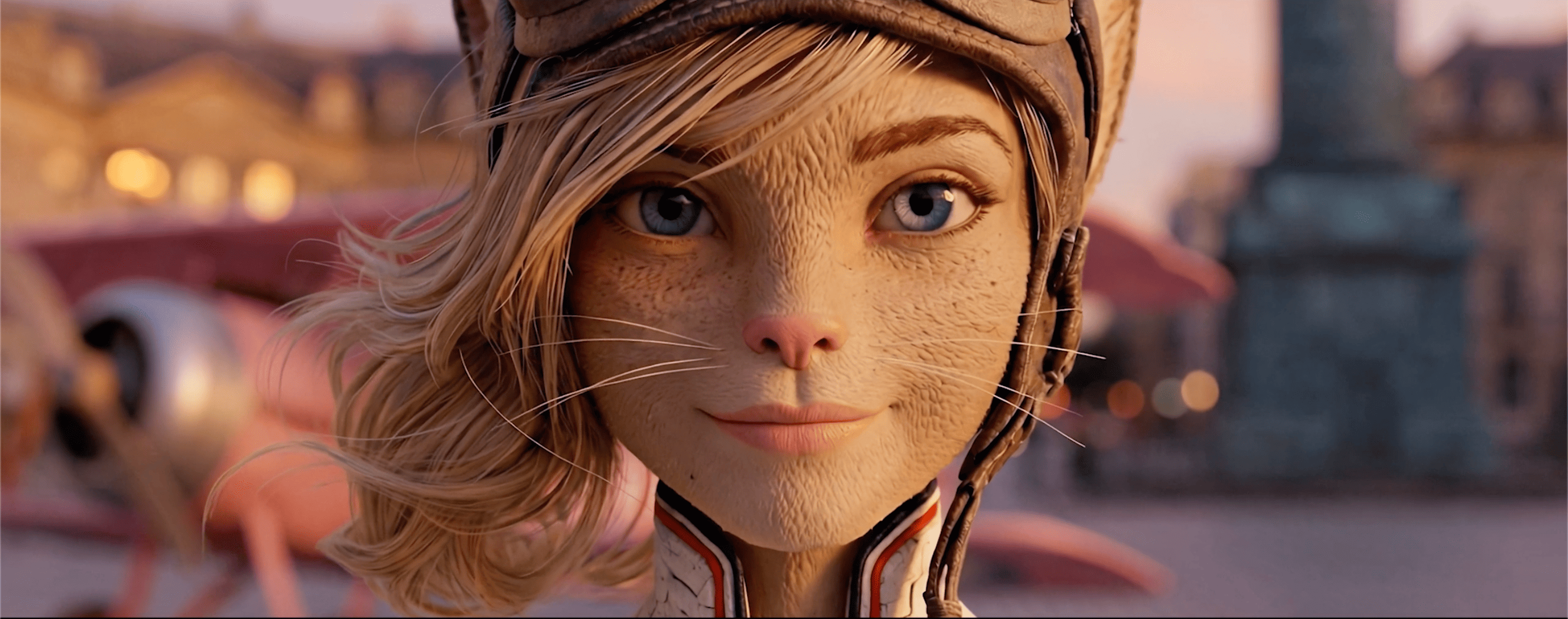
The new face of WISECOM, created by Micael Bento, which we had the chance to support with HEYIA Studio, is a good illustration of this.
The character is not decorative.
It serves a purpose.
It embodies a universe.
It tells the story of a business reality, in this case that of a call center.
It's not an “AI” gimmick.
It's a brand storytelling tool.
Embodying your brand does not mean losing credibility
It is one of the most common misconceptions in B2B.
Embodying your brand does not mean becoming cartoonish, childish or less serious.
Quite the opposite.
A well-designed character can:
— to clarify a speech,
— humanize a promise,
— create proximity,
— strengthen memorization.
It's all about accuracy.
Conclusion
For a long time, brand embodiment was reserved for big brands, big budgets, and fixed strategies.
Today, AI is changing the game.
It allows B2B brands to dare to test, to iterate without burning their wings and to embody their brand without losing credibility.
The real question is no longer whether it is possible.
But how do you do it in a fair, consistent, and sustainable way.
About HEYIA Studio
HEYIA Studio supports brands and agencies to integrate AI into their creation of visual and video content.
Our work is based on a simple triptych:
- an audit of uses and challenges,
- practical workshops oriented to production,
- and follow-up to structure clear, concrete and replicable workflows.
Learn more about our approach here.

.png)
.webp)
