
.png)
.svg)


The reflex that became addiction
A quick call between two meetings “just to see.”
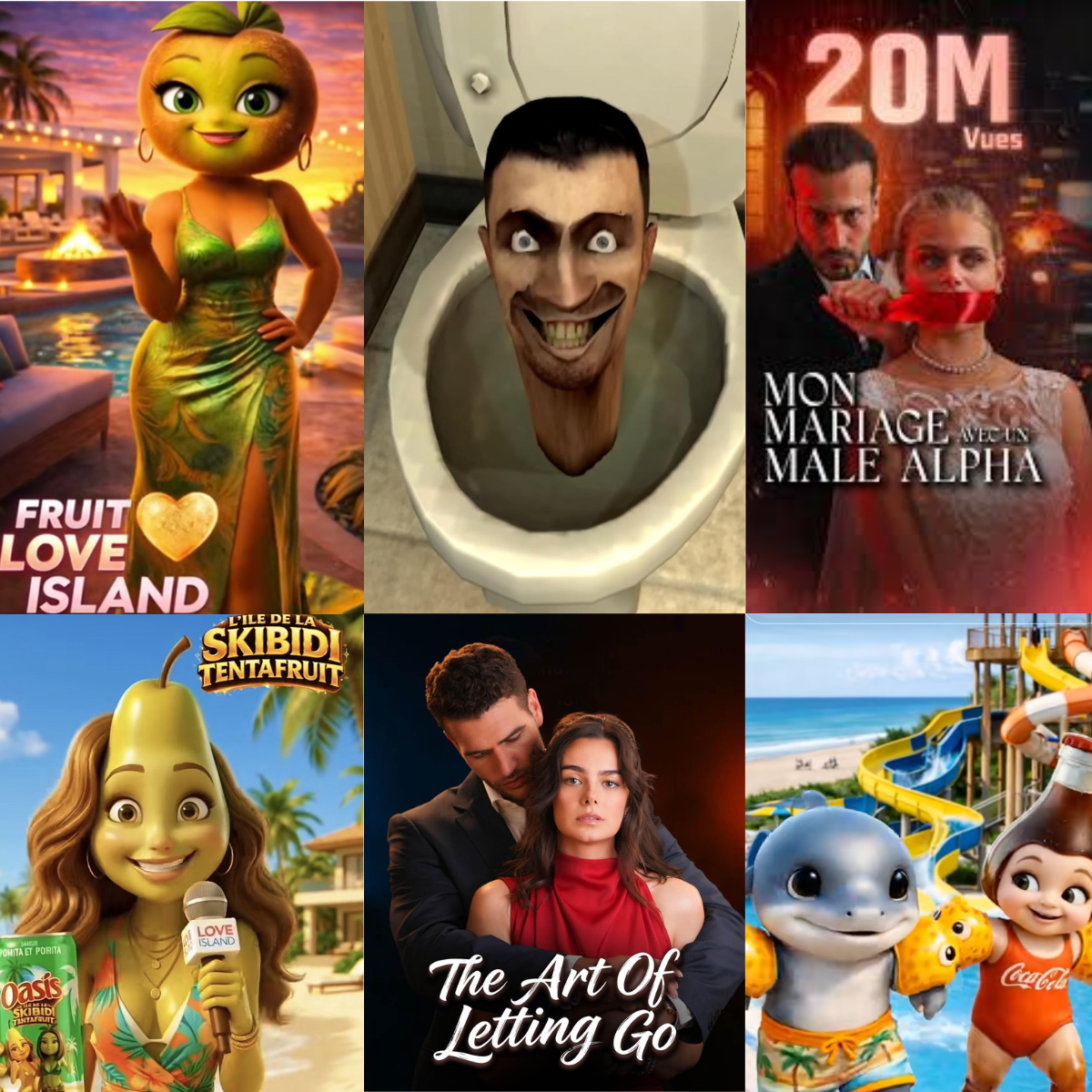
An image created in front of his Netflix series.
A strategy discussion with Claude during a stroll.
We think that we are not working because it has become a reflex.
And even a fun time.
But you have to stop lying to yourself: We became completely addicted.
Like Instagram or TikTok.
The difference? You don't feel guilty scrolling for nothing.
But with AI, you tell yourself that you are productive.
When we're just... still working.
My own trap
I often go out for a walk to relax and reflect.
A moment of my own, away from the screens.
Except that I find myself discussing strategy with Claude or ChatGPT.
On my phone. While walking.
I don't feel like I'm working.
It is even a moment that I love.
But that's exactly where it gets dangerous.
The Berkeley study that confirms the problem
The UC Berkeley Haas School of Business study just confirmed it:
AI has not reduced the workload. It intensified it.
Researchers Aruna Ranganathan and Xingqi Maggie Ye followed 200 employees of a tech company for 8 months. Their findings are unquestionable and were published in the Harvard Business Review.
Not because people work until 2am.
But because AI is everywhere:
— the breaks,
— lunches,
— the trips,
— walks,
— sofa evenings.
Real working time: not reduced despite the promised automation.
Mental load: increased, because constant supervision is required.
Pro/personal life border: completely unclear, or even non-existent.
A complementary ActivTrak study of 164,000 employees confirms the trend: the time spent on email and messaging has more than doubled after adopting AI, while concentrated work time has fallen by 9%.
AI was supposed to set us free.
It chained us in a different way.
Why AI is more addictive than social networks
With social networks, we know that we are procrastinating.
We feel guilty (a bit). We end up closing the app.
With AI, zero friction:
— no need to open complex software,
— no technical setup,
— just a question, an idea, a prompt,
— immediate and rewarding result.
Getting started is so easy that you start all the time.
And it's impossible to know when to stop.
With a Word file, at some point, it's over. Saved. Closed.
With AI, there is always:
— a possible improvement,
— a variant to be tested,
— a reformulation to try,
— a different angle to explore.
We iterate endlessly. Because it's easy. Because it's fast.
The deceptive sense of productivity
The ultimate trap: you have the impression of being hyperproductive.
Look at everything we've produced!
Three versions of this email.
Five different visuals.
Two content plans.
A complete benchmark.
But have we really made progress?
Or did we just... do more?
Facade productivity.
A lot of outputs. Not necessarily more impact.
AI Brain Fry: when the brain overheats
Now there's a word for that: AI Brain Fry.
The brain that overheats by dint of supervising everything, validating everything, adjusting everything.
The symptoms:
— difficulty disconnecting mentally,
— feeling of being “always in the process of”,
— cognitive fatigue despite less physical effort,
— inability to enjoy a moment without “optimizing” something.
With traditional work, you work, you are tired, you stop, you recover.
With AI, you work without feeling like you are working, you are tired without understanding why, you continue because “it's just a small thing”, you never really recover.
The brain no longer has a clear stop signal.
The invisible mental load
Supervising the AI is exhausting:
— check that the result is accurate,
— adjust what is wrong,
— reformulate to improve,
— validate the overall consistency,
— maintaining the overall vision.
This mental load is real.
But we don't count it as “real work.”
Fatal error.
The times when the AI steals our breaks
The stroll that is no longer one.
Before: going out for a walk = to disconnect, to think freely.
Now: brainstorm with ChatGPT, validate ideas with Claude.
It's called a break. It's work.
The journey that becomes a mobile office.
Before: reading, music, daydreaming.
Now: prompts, generation, iteration.
AI turns every downtime into a productive opportunity.
Except that downtime... serves a purpose.
They let the brain breathe.
The sofa that became a workstation.
The series is on. The phone comes out.
“Just a quick prompt.”
45 minutes later...
We're watching the series diagonally. We work diagonally.
Neither of us is doing well.
Why don't we feel guilty
With Instagram, you know you're procrastinating. We feel a bit guilty.
With AI, we create, we experiment, we explore.
It's intellectually stimulating.
So we don't feel guilty.
We tell ourselves that we are learning, that we are progressing.
And it's true! But in the meantime, the brain never stops.
Try to go a day without using AI if you use it daily. Just to see.
How many times will you have the instinct to open ChatGPT “just for...”?
The real risk: no longer knowing how to disconnect
Real moments off are essential:
— for creativity (the best ideas come in the shower, not in front of the screen),
— for mental health (the brain needs downtime),
— for relationships (to be really present with others).
The AI eats away at these moments.
Little by little. Without us noticing it.
Paradox: by working more, we sometimes produce... less well.
Because:
— less perspective on what we do,
— less time for ideas to mature,
— overproduction which dilutes quality,
— cognitive exhaustion that reduces discernment.
Doing more is not always doing better.
Should we regulate AI for our mental health?
We're starting to regulate social networks for teens.
And AI?
AI is perceived as “productive” and therefore legitimate.
But addiction is still an addiction.
The necessary safeguards, on the individual side:
— define “no AI” ranges during the day,
— limit use outside of working hours,
— force yourself to take real breaks without screens,
— measure the real time spent (we always lie to ourselves).
On the business side:
— train in rational use, not just in use,
— value quality, not production volume,
— respect the right to disconnect (even from AI),
— measure the mental load, not just the outputs.
How to regain control
The questions to ask yourself, honestly:
— how many times a day do I open ChatGPT/Claude/Gemini?
— do I use AI during my “breaks”?
— am I thinking of prompts while doing something else?
— do I have trouble stopping once started?
Create clear rules:
— no AI after 8 p.m.,
— no AI during meals,
— no AI during walks,
— no AI on weekends (except for a real emergency).
Easy to say. Hard to stick to. But necessary.
And rediscover creative boredom.
It's in boredom that the best ideas are born.
It is in emptiness that the brain regenerates.
It is in silence that creativity arises.
AI deprives us of boredom. And that is a problem.
Conclusion
AI is an amazing tool.
I use it every day and I won't go back.
But like any powerful tool, it requires safeguards.
What you need to remember:
— AI transforms breaks into disguised work sessions,
— the feeling of productivity is often misleading,
— AI brain fry is real: the brain overheats,
— we work as much (if not more), just differently and everywhere,
— not knowing how to disconnect is the real risk.
The real question is not “can we?” It's “should we?”
Generating an image on a Sunday night in front of Netflix? Technically, nothing is stopping it.
But should we? Is it really necessary?
Or is it just... the addiction talking?
AI should serve us. Not enslave us.
About HEYIA Studio
HEYIA Studio supports brands and agencies to integrate AI into their creation of visual and video content.
Our work is based on a simple triptych:
- an audit of uses and challenges,
- practical workshops oriented to production,
- and follow-up to structure clear, concrete and replicable workflows.
Learn more about our approach → here

.png)

.webp)
