
.svg)


Brainrot and AI slop in a few figures that make you vomit
We're talking about stupid stuff. But we also talk about cash machines.
Some facts that make you dizzy:
— Vertical dramas will weigh 11 billion dollars in 2025
— Fruit Love Island has broken the growth record in TikTok history
— 3 million subscribers in 9 days for a fruit count who flirt
— DramaBox (44M monthly users) exceeds Hulu and Paramount+ combined
No, it's not a joke. This is the reality of the content market in 2026.
First of all, what is AI slop?
Before we go any further, let's define the term.
The AI slop, it is this content generated by AI, produced on the chain, aesthetically mediocre but ultra-addictive. The word comes from “slop” in English: porridge that is given to pigs. Not flattering.
The term refers to anything that generative AI produces en masse without concern for quality:
— weird images with 7 fingers and empty eyes,
— absurd videos that defy physics,
— SEO articles without any value,
— LinkedIn posts created serially by ChatGPT.
And the AI slop is not just a subset of the brainrot.
It was the fuel that increased its production. Before, making a brainrot video required a bit of work. Today, 3 prompts are enough.
Fruit Love Island: the phenomenon that sums it all up
Haven't you heard of Fruit Love Island?
Welcome to the old jerks (I'm in the room, don't worry).
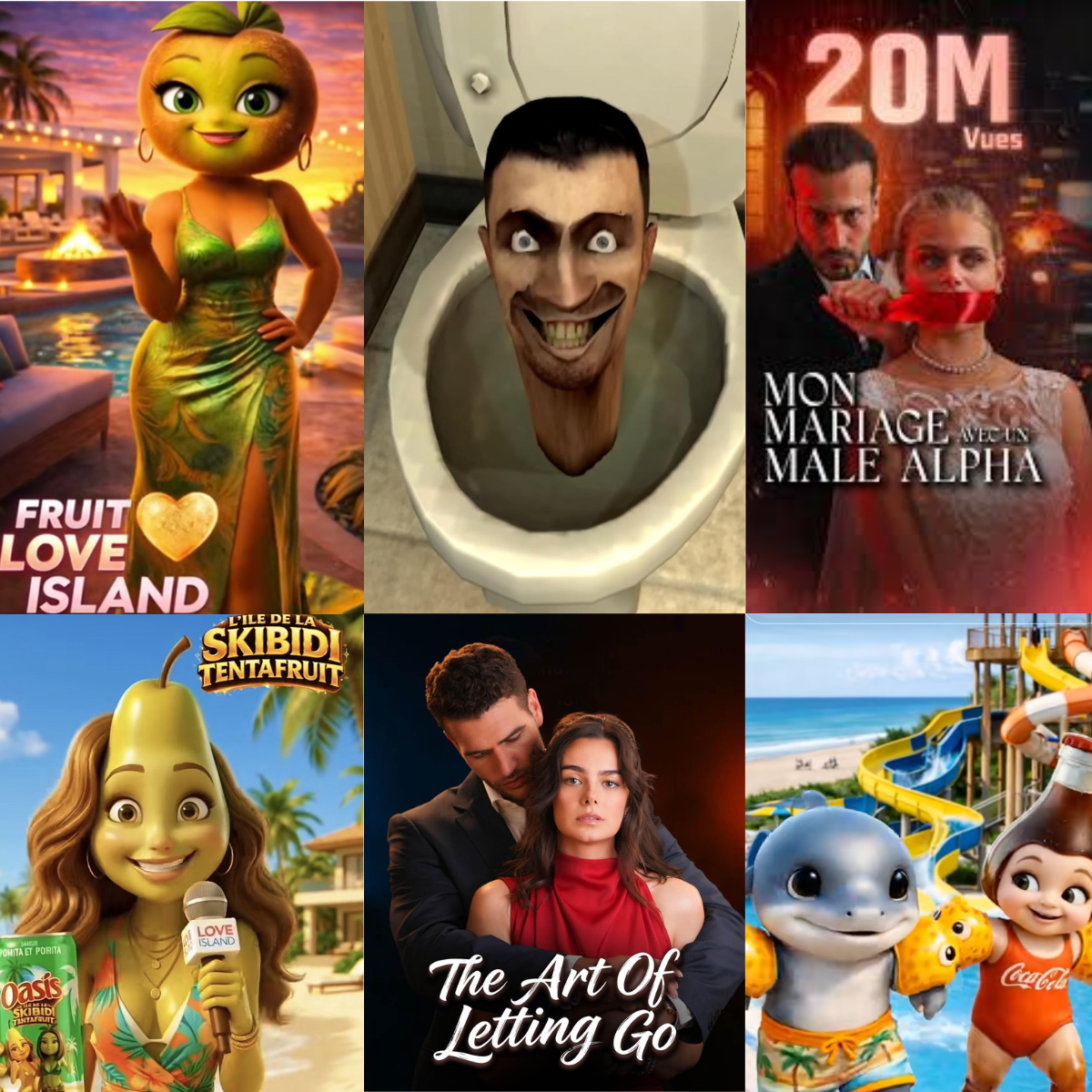
The concept is as simple as it is absurd: AI-animated fruits that parody the show Love Island. They flirt, quarrel, form couples. Each episode is generated by artificial intelligence. Pure AI slop.
The result?
— Launched March 13, 2026 on TikTok
— Over 3 million subscribers in 9 days
— Over 200 million cumulative views
— Absolute record of growth on the platform
For comparison, even Lisa from BLACKPINK didn't do that.
Vertical dramas: the 11 billion that exceed Netflix on mobile
Vertical dramas (micro-dramas) are the other phenomenon that makes Hollywood shake.
The format? Mini-series of 60 to 90 seconds per episode, filmed vertically for smartphones. Scenarios worthy of the worst telenovelas. An often pathetic acting game. Cliffhangers every 90 seconds.
And it is a hit at an amazing level:
— $11 billion in revenue in 2025, projection 14 billion in 2026
— ReelShort and DramaBox exceed Netflix and Disney+ in terms of mobile engagement
— DramaBox alone: 44 million active monthly users
— Ex-China revenues doubled in one year, reaching $800 million in Q3 2025
The business model is viciously effective: the first 5-10 episodes are free. Then paywall at the moment of maximum tension. Unlocking the next one costs a few cents. Multiply by 100 episodes. Do the accounts.
And Hollywood ended up following suit:
Fox Entertainment has taken a stake in MyDrama. Paramount Skydance, Lionsgate, Hallmark are collaborating with ReelShort. Disney put DramaBox in their accelerator. Majors can't pretend to ignore the format anymore.
Brainrot, the new dominant culture?
Skibidi Toilet. Italian brainrots. Monsters University rizz party. Fruit Love Island.
This content has a name: The “brainrot” — literally “brain rot.” The term was by the way Word of the year 2024 according to Oxford.
The principle is always the same:
— Short format (less than 60 seconds)
— Absurd to the point of becoming comical
— Visually bizarre, often generated in AI (AI slop in its purest form)
— Addictive by nature (fast pace, constant cliffhangers)
And it's watched by 10-20 year olds... but also by 30-50 year olds who got caught up in algos.
Why does it work? The science of scrolling
Many are outraged by these contents.
But no one is forcing millions of people to watch.
And it's not just an AI subject. Some brainrot content is pure AI slop, others are created by hand. And they're doing the same thing.
The common point is the format.
Short. Nonsense. Addictive.
Our brains are wired to respond to novelty and unpredictability. The brainrot checks all the boxes:
— Constant visual stimulation
— Surprise with each video
— No cognitive effort required
— Immediate gratification
— Infinite scroll loop
It's the visual equivalent of junk food. We know it's not good. We're back to it anyway.
Brands are getting on board (necessarily)
Faced with these numbers, brands cannot remain at the dock.
Oasis was one of the first to surf the brainrot with ads using the absurd codes of the genre.
Other brands are testing vertical dramas as a white label or in partnership.
TikTok advertisers are buying up space on successful Brainrot accounts.
The logic is unstoppable: where the eyes are, there are the budgets.
Even if it hurts your teeth to associate your image with fruits that are on reality TV.
It's not (just) a kid phenomenon
Stop the “it's just for teens.”
Vertical dramas, for example, are primarily aimed at women aged 25-55. Yes, fifty-five. ReelShort's audience is mostly made up of mothers who binge watch during their lunch break or in the evening in front of the couch.
Fruit Love Island attracts 15-35 year olds.
Italian brainrots affect 8-18 year olds.
Skibidi Toilet starts from the age of 6-14.
Together, these contents cover 80% of the connected workforce.
The real problem: creative sanction
This is where it gets really interesting for creatives and brands.
First observation: our creative standards are collapsing.
Not because people have become stupid. But because the algorithms massively reward the short + absurd + addictive format.
Second observation: the ROI of brainrot and AI slop is unbeatable.
A vertical miniseries costs $40,000 to produce in 7 days. The first success brought in tens of millions. No traditional advertising campaign can match.
Third observation: quality is becoming a luxury.
Making “beautiful” and “worked” content is becoming a premium positioning. In the same way as gourmet cuisine versus fast food.
So, old jerks or a crazy world?
I'm not going to hide it: personally, it's beyond me.
Sometimes I like to scroll and laugh at stupid things on social networks. I don't pretend to only watch smart content. But Fruit Love Island? Skibidi Toilet? Pseudo-erotic micro-dramas?
I am having a hard time.
Two hypotheses are available to us:
Hypothesis 1: We're just too old. Not on target. Like our parents who didn't understand the PlayStation or Tokio Hotel. Each generation despises the content of the next. That is life.
Hypothesis 2: Our attention system is falling apart. Algorithms push us towards the most lobotomizing. The quality disappears in favor of the addictive. It's serious in the long run.
The truth is probably between the two.
What Brands and Creatives Need to Remember
Beyond easy outrage, there are concrete business lessons.
For brands:
— Ignore the brainrot = ignore 11 billion dollars in the market
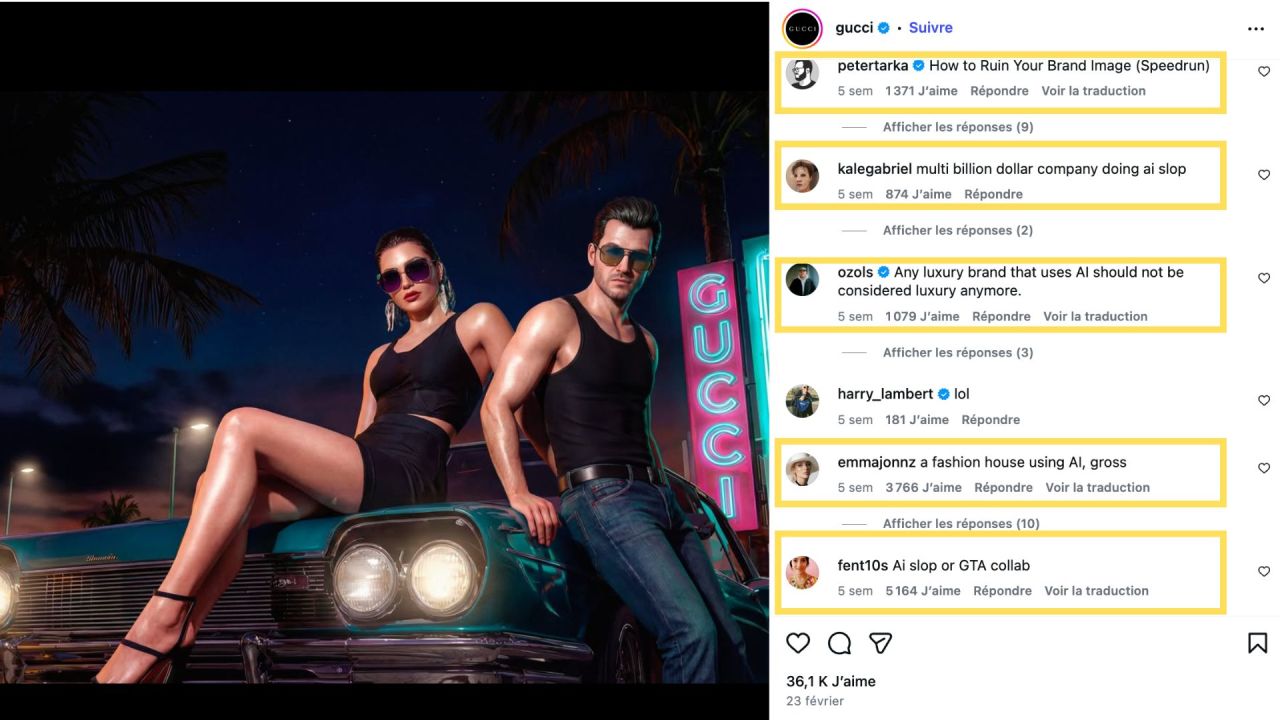
— But surfing without subtlety = destroying your brand image
— The challenge is in the dosage: using the codes without wallowing in them
For creatives:
— Short + absurd formats are becoming a new language
— Mastering Rhythm and Cliffhanger is becoming a key skill
— Generative AI accelerates the production of this type of content
For the AI ecosystem:
— The AI slop raises the question of copyright (Fruit Love Island was also removed from TikTok after massive reports concerning the use of the Love Island brand)
— Platforms are starting to moderate this content to avoid the massive “AI slop”
— The Issue of Quality Becomes Central Even in the Absurd
Conclusion: Brainrot and AI slop are not accidents
It is not a temporary phenomenon. It's a cultural shift.
What you need to remember:
— Brainrot and AI Slop Content Weigh Billions and Are Not Going to Disappear
— The format (short, absurd, addictive) matters more than the content
— AI speeds up production but is not the only cause
— Brands Will Have to Deal with This New Reality
— Traditional creative standards are becoming premium positioning
I am not saying that it is good. I am not saying that it is wrong.
I'm just saying that it's there, and that it's already heavier than some historic industries.
The only question worth asking: How do we position ourselves in the face of this? Are we taking part in it? Are we different from it? We don't know?
Your answers will likely define your content strategy for the next 3 years.
About HEYIA Studio
HEYIA Studio supports brands and agencies to integrate AI into their creation of visual and video content.
Our work is based on a simple triptych:
- an audit of uses and challenges,
- practical workshops oriented to production,
- and follow-up to structure clear, concrete and replicable workflows.
Learn more about our approach → here

.png)
.webp)
